
Representative Work
Where Transformation Happens
Jason’s work sits at the intersection of business, science, and technology. Across his career, he has led institutional transformation while also engaging directly in the design and application of advanced analytics, AI, and clinical research systems.
The following examples illustrate both the transformation of organizations and the underlying technical and scientific work required to make those transformations real.

Enterprise Transformation Examples
-

Building AI & Data Value Creation with Leaders and Investors
(CREO, Bionic Partners)
Led AI and data strategy for a healthcare and life sciences firm working with private equity investors, boards, and their portfolio companies.Jason worked with leaders on growth strategy, technology investment, organizational capability, and value creation plans, helping teams turn initiatives into measurable business performance. CREO was acquired by a healthcare-focused private equity firm during his tenure.
-

Building Enterprise Analytics as a Core Institutional Capability
(UNC Health)
Built and scaled an enterprise analytics and data science capability, transforming UNC Health into one of the most advanced analytics organizations in healthcare.Jason defined the strategy, operating model, and investment approach, hired and led a 40+ person team, and delivered measurable improvements across clinical and operational performance. This work demonstrated how analytics can be institutionalized as a core capability rather than a fragmented function.
-

Driving Industry Transformations through Data and Advanced Analytics
(SAS)
Led the transformation of SAS’s health and life sciences strategy, reshaping how advanced analytics could be applied across the industry.Jason built a global practice, aligned product and industry strategy, and established a health analytics think tank to explore emerging applications with leading organizations. This work helped define how data and analytics could drive value across research and healthcare delivery.
-

Digitizing Clinical Research at Scale
(IQVIA / Quintiles)
Led the transition of clinical research from paper-based processes to electronic data capture, transforming how trials were conducted globally.Jason worked across business, scientific, and technology domains to identify, validate, and scale emerging technologies, enabling more efficient, standardized, and data-driven clinical research operations.
Selected initiatives across AI, analytics, and transformation
-

Agentic AI
I fully designed and engineered a voice-based AI agent called Ira that uses retrieval augmented generation (RAG) and model context protocol (MCP) concepts to monitor and report on the ongoing progress of clinical research programs and their patients.
Fun Fact: Ira was named after a voice-based computer from a famous 1970’s TV show…can you figure out which one?
-

Expert-level AI Content Creation
I’ve built multiple AI agent systems that transform information synthesis and document / presentation development into automated deliverable creation while preserving or improving expert-level content quality.
Fun Fact: Today, “single-shot” AI content writing is generally unable to fully capture the breadth of writing quality…just like humans!
-
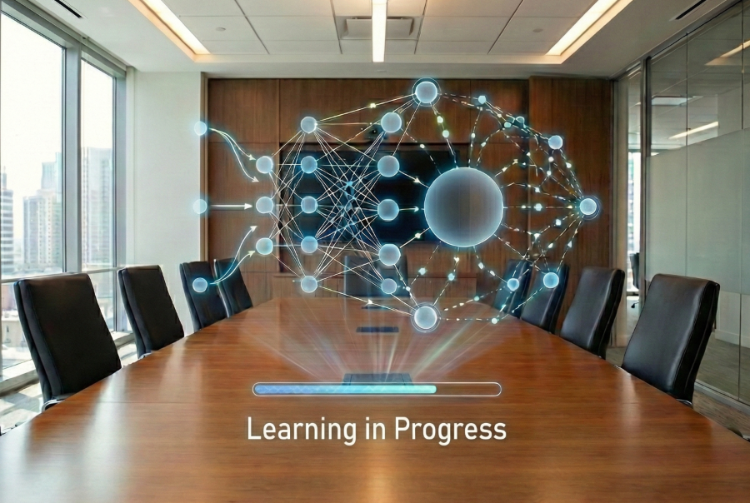
Machine Learning
My teams and I have used a variety of machine learning methods to enable us to derive insights from clinical, financial, and administrative data that would otherwise be difficult for human reviewers to detect.
Fun Fact: My team’s first commercial solution leveraging ML was way back in 2010 (though I have neural network disks dating back to the late 1980s)!
-

AI Architecture
I’ve designed the comprehensive technical strategy and blueprint for scalable AI and data sciences adoption across multiple organization, addressing issues such as model agnosticism, separation of concerns, extensibility, data design, and security.
Fun Fact: Technical challenges that organizations face in driving AI adoption are often related to data and architecture, not underlying model capabilities.
-

Disease Modeling
My work has demonstrated how artificial intelligence (AI) and machine learning (ML) can characterize challenging elements of disease progression important for evaluating research designs and treatment decisions.
Fun Fact: research studies that use data-driven disease progression models to inform participant selection can demonstrate higher efficacy and safety.
-

Hospital Modeling
We have used artificial intelligence (AI), operations research (OR) methods, and other computational techniques to improve the flow of patients through hospitals, surgical units, and patient transport services.
Fun Fact: We reduced the closure rate of one emergency department by 30%, enabling care to thousands of additional patients every year.
-

Outcomes & Value Analysis
Several solutions reflect the fact that sustainable healthcare costs require a deeper understanding of the relationship between treatment options, costs, and patient outcomes delivered.
Fun Fact: My team’s solutions have successfully identified drugs, medical devices, and medical practitioners that demonstrate better outcomes at lower costs.
-

Healthcare Quality
Our data and analytics projects commonly need to describe how factors such as patient demographics, risk factors, treatment decisions, and care practices influence observable healthcare quality and outcomes.
Fun Fact: When building healthcare quality insights, my teams focus on creating a “single source of truths” that can be used to guide clinical and operational decisions.