The Operating Platform Era in Life Sciences
AI Value Creation in Life Sciences is Not Just About Discovery
Life sciences has become a favorite poster child for promoting the future benefits of artificial intelligence (AI). But the enthusiasm around therapy discovery and design often obscures the business reality: the desired step-change in value creation from AI has not yet materialized. And part of the problem is that the industry has not settled how AI-derived value attaches to the assets and capabilities it already owns.
Life sciences organizations will capitalize and compete as operating platforms. The historical notion of a platform play based around scientific IP will expand beyond biotechs and their discovery and development methods. Pharma services (e.g., CROs, CDMOs, labs, SMOs) and technology players will compete and differentiate on their ability to offer AI-enabled services and products that require scalable, reliable process, AI, and data infrastructure.
Curated data access, improvement, and leverage are becoming mandatory. The power, speed, and effectiveness of AI platforms is fully dependent on the data powering the algorithms and workflows. Raw data is a commodity. But data intelligently curated, harmonized, and structured for optimal delivery of tailored discovery, clinical development, manufacturing, lab, and regulatory services is not.
Competition will increase as AI drives higher market velocity. AI democratizes access to scientific expertise for both traditional and new platform-oriented entrants. As the volume of potential targets increases, the industry will experience higher competition for investment capital. And competition for pharma service contracts supporting those treatments will increase as operations become more efficient and proposal reviews become AI orchestrated.
AI-driven market disruption will impact how companies are assessed at future recapitalization milestones. Investors have always considered factors such as safety, efficacy, pricing, and formulary access in evaluating investment targets. But in a market where AI models and treatment targets are plentiful and emerge quickly, investors will increasingly view assets and risks as subject to higher disruption.
Valuation will ultimately reflect AI-related leadership. For all but a handful of firms, external AI innovation velocity and change will exceed internal adoption maturity. Regulatory expectations will be in flux, costs from rising AI consumption will increase, trustworthy model behavior will remain problematic, and access to some capabilities will be inseparable from geopolitical and national security concerns. Firms that master AI advancement and agility will capture higher multiples.
Building Momentum for New Value Creation
AI and data platforms have emerged as leading strategies for addressing persistent industry issues such as development timelines and rising costs. But the story is much larger than drug discovery, encompassing how organizations are pursuing strategic alignment, competitiveness, leadership, and broader technology modernization.
Alongside rising drug development costs, the industry is getting returns with AI outside of discovery, though AI adoption maturity is still low.
Both investors and operators are prioritizing AI and data platforms as levers for addressing industry growth challenges.
AI leadership and discipline will decide who captures the value.
Building More Valuable Life Sciences Organizations
Life sciences leaders, investors, and boards should be mandating a seven-prong framework for growing tomorrow's life sciences businesses.
1. Platform orientation. Organizational leaders and boards need to establish strategic clarity on the specific platform characteristics that will define future competitiveness. Platform considerations may include any combination of clinical, delivery, operational, technical, market, and financial factors that collectively differentiate the organization.
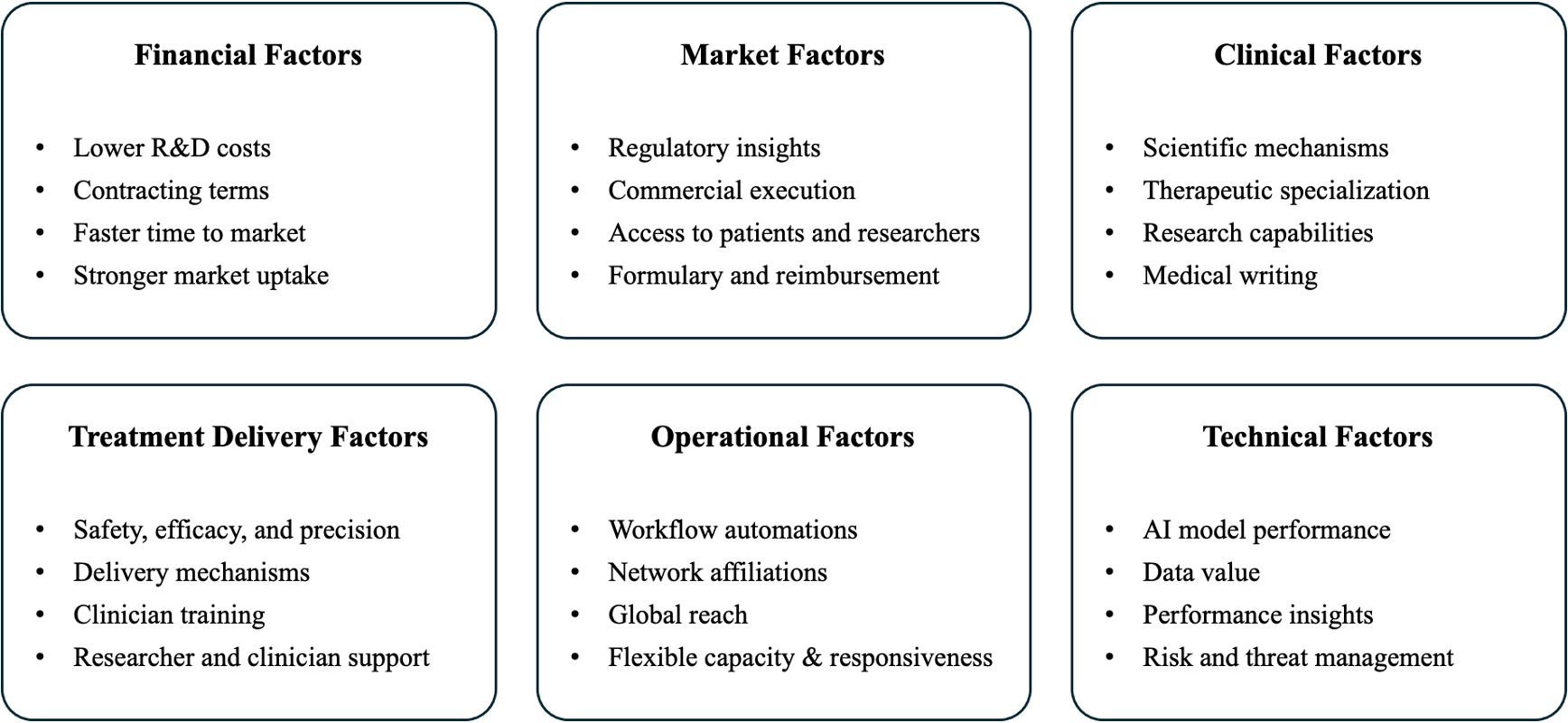
Figure 1. Potential factors influencing AI-related platform strategies.
2. Data foundation. One of the most important dimensions of AI value creation resides not in the engine but in the fuel. Data re-use terms have been a persistent sticking point between pharma services firms and their clients. But the iterative curation of datasets that span clinical trial observations, bioanalytical lab results, and real-world evidence is a prerequisite for unlocking AI's potential for improved precision, efficacy, and safety. The work is already well underway though far from universal, so failure to embrace it notably risks future competitiveness.
3. Measure what matters. AI is a type of digital transformation, and such improvements require a top-down approach. Point solutions and basic tools are useful but not transformative. The work requires aligned cross-functional execution of strategic priorities that include specific, measurable goals and performance targets (i.e., revenue, margin, enrollment, development timeline, quality defects, turnaround time, capacity) associated with AI adoption.
4. Dedicated executive accountability. Investors, regulators, physicians, pharma service customers, and patients are all aligned in one respect: they want responsible AI use. But no organization can get there if AI is everyone's part-time job. AI's complexity, pace, costs, and risks require specialized expertise with the capacity to address the critical, cross-functional dependencies needed for safe, effective adoption and use. A named senior leader should be accountable for AI strategy and delivery covering internal capabilities, data, cross-functional orchestration, and solutions.
5. Eliminate shadow IT / AI efforts. Fragmented, unmanaged forays into AI waste time and increase organizational risks for GxP and regulated environments. AI tools, lower-level AI resources, and “pilots” miss the common causes of failed AI investments. And those resources cannot mitigate well-established risks in strategy, quality, compliance, scalability, and ROI. Risks associated with AI development, deployment, and adoption are best addressed using repeatable approaches, consistent designs, and models proven to accurately and reliably scale.
6. Regulatory rigor. The regulatory expectations embodied in GxP, 21 CFR Part 11, Annex 11, and recent AI guidelines from FDA and EMA reflect long-standing principles. It is possible to use AI in regulated processes, validate AI systems, and provide appropriate safeguards for controlling quality. But it is not free, and does not emerge without a disciplined effort to develop appropriate organizational policies, practices, controls, training, and documentation. These competencies become especially important given the high rate of change and the emerging cybersecurity risks associated with AI.
7. Agile change management. All of the above describe a life sciences ecosystem that will notably evolve in the foreseeable future. While AI brings lots of opportunity for innovation, such advancements can also represent cultural and operational challenges in an industry where regulatory and safety concerns are paramount. To capture the moment will require nuanced leadership in building a shared perspective on the AI-driven value creation investors seek and the corresponding health outcomes vital for patients.
Practical Experiences
Over the course of my professional experience, I’ve seen those seven dimensions consistently deliver results. Picking just a few examples:
Executive accountability: the digital transformation program at an international CRO languished for years until a VP with an explicit remit for executive collaboration, enterprise adoption, and measurable results was appointed. Six months later, a global implementation program supported by multiple partnerships, an anchor client, and $10M in incremental revenue established the firm as an emerging market leader.
Platform strategy: the development of an aligned data, analytics, and AI platform allowed one organization to develop reusable intelligence that spanned research and real-world evidence use cases. The associated data curation produced a de facto single source of truth leveraged across the organization, reducing resource utilization and improving quality.
Regulatory rigor: one company developed AI agents capable of ingesting both external regulatory statutes and their own regulatory policies and guidelines to develop assessment agents for their operations. This in-house regulatory AI platform provided prescriptive guidance to employees, avoided hiring of additional regulatory capacity, and opened the door for continuous compliance monitoring.
Agile change management: a large enterprise with high market penetration was able to triple development productivity and quadruple their product portfolio with no additional headcount. Fundamental to this transformation was attaching regulatory obligations to computable operations.
In developing these advanced capabilities, some leaders periodically express concerns about the incremental costs associated with these more disciplined approaches. In virtually all of my experiences, total costs are actually lower. Though there are marginal increases in the time required to “build it right and deploy it well”, those differences pale in comparison to the efficiency gains and cost avoidance associated with successful programs.
I’ve used these proven disciplines in multi-billion dollar enterprises like IQVIA, GSK, Microsoft, and SAS, as well as VC- and PE-backed organizations grappling with early-stage growth. They work.
In Summary
AI’s contribution to drug discovery remains a beacon of hope for better medicines. Few doubt that the computational capabilities deployed in design, targeting, materials development, and automation can accelerate development and reduce R&D failures. Indeed, we are starting to see it in the market today.
But the opportunity for transformation remains considerably larger than discovery. There is no question that AI "works"; the pending question is how to make it work optimally in each organizational context. That performance comes from reusable platforms and the leadership to build them.
The operating platform era has already started; the question is who will be ready for it.
Sources: 1-Capgemini Research Institute (Life Sciences Engineering & R&D Pulse; Biopharma R&D turns to AI), 2-ZS, 3-Deloitte, 4-EY, 5-McKinsey, 6-Pistoia Alliance, 7-Thermo Fisher Scientific, 8-Bain & Company
